
- Home
- Treatments
- Microneedling & RF
Skin
Microneedling in Vehari
Controlled micro-injuries that prompt the skin to rebuild collagen — the main treatment for acne scarring, open pores and rough texture.
What it is
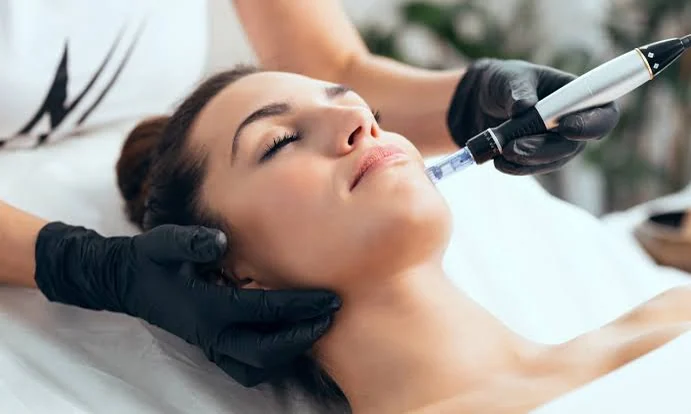
Microneedling uses a device with fine needles to make controlled micro-channels in the skin at a depth we set. The skin responds the way it responds to any injury — by producing collagen. Repeated over a course, that new collagen fills in depressed scars and tightens the walls of open pores.
RF microneedling adds radiofrequency energy delivered from the needle tips into the deeper layer. The needles are insulated, so the energy is released below the surface rather than at the top of the skin. In brown skin this matters: it lets us remodel at depth while keeping heat away from the surface, which lowers the risk of pigmentation afterwards.
This is a rebuilding treatment, so it works on a collagen timeline rather than an immediate one. You will look slightly better in a week and meaningfully better at eight. Anyone offering transformation after one session is describing swelling, not collagen.
Benefits
- The most effective in-clinic option for depressed acne scarring
- Visibly tightens enlarged pores over a course
- Improves rough, uneven texture
- Softens fine lines and early crepiness
- Works on stretch marks on the body
- Insulated RF needles keep energy away from the surface, safer for deeper skin tones
Who it suits — and who it doesn't
A good candidate if…
- You have depressed acne scars, especially rolling or boxcar types
- You have open pores or rough texture
- Your active acne is under control and has been for a few months
- You can accept a course over four to six months
Not suitable, or postponed, if…
- You have active, inflamed acne — needling through it spreads bacteria
- You are pregnant or breastfeeding
- You used isotretinoin within the last six months
- You have a history of keloid scarring
- You have an active skin infection, warts or cold sores in the area
- You have a bleeding disorder or are on blood thinners
This list is not exhaustive. Your medical history, medications and previous treatments are reviewed at consultation, and that review sometimes changes the plan.
The procedure, step by step
- Assessment. We identify your scar types, because ice-pick, boxcar and rolling scars respond differently and some need a different treatment entirely.
- Numbing. Topical anaesthetic is applied for 30 to 40 minutes. This is why the appointment is longer than the treatment.
- Treatment. The device is passed over the area at a depth set per zone — deeper on the cheeks where scarring sits, shallower around the eyes and forehead. You will feel pressure and vibration, and warmth if RF is used.
- Immediately after. The skin looks pink to red with pinpoint dotting. A soothing serum and barrier cream are applied.
- Spacing. Sessions are four to six weeks apart, so each round of collagen has time to form before the next.
Recovery and aftercare
Day one: red and warm, like mild sunburn, sometimes with slight swelling. Day two: pink and a little tight. By day three most people are back to normal, occasionally with light flaking around day four or five.
For the first 24 hours: no makeup, no gym, no swimming, nothing but the products we give you. Then gentle cleanser, moisturiser and sunscreen for a week. No retinoids, acids or scrubs for seven days.
Sun protection is not optional with this treatment. SPF 30 or higher every morning, reapplied if you are outdoors, plus a hat or shade where you can. Skipping it is the single most common reason a good result does not hold.
Results you can expect
Realistic expectation for acne scarring is 40 to 70 per cent improvement over a full course — noticeable to you and to people who know you, not a return to skin that never scarred. Pores tighten steadily. Texture is often the first thing to improve.
Collagen keeps forming for around three months after your last session, so the final result is judged then rather than at the end of the course. Ice-pick scars respond least to needling and may need a different technique, which we will tell you at assessment.
Pricing. Priced per session, higher with radiofrequency, and by area treated. Course pricing is quoted up front once the assessment confirms how many sessions your scarring needs.
Frequently asked questions
Does microneedling hurt?
With topical numbing it is tolerable — pressure and vibration rather than sharp pain. The forehead and along the jaw are more sensitive than the cheeks. Without numbing it would be genuinely painful, which is why we always numb.
How many sessions do I need for acne scars?
Usually four to six, spaced four to six weeks apart. Deeper scarring may need more. You will get a specific number after your scars are assessed, not a guess over the phone.
Is it safe for brown skin?
Yes, and it is one of the safer resurfacing options for deeper skin tones, particularly the insulated RF version where energy stays below the surface. Sun protection afterwards is essential to avoid pigmentation.
Can I do it while I still have active acne?
No. Needling through inflamed acne can spread bacteria and worsen scarring. We treat the acne first, wait until the skin has been settled for a few months, then start resurfacing.
Are dermarollers from the market the same thing?
No. Home rollers use short needles at uncontrolled depth and pressure, are difficult to keep sterile, and are a common cause of infection and new marks. They do not reach the depth where scar remodelling happens.
When can I wear makeup again?
After 24 hours, and mineral makeup is kinder than heavy foundation for the first few days.
Written and medically reviewed by Dr. Bareera Usman, MBBS
Last reviewed: July 2026. This page is general information, not a diagnosis or a treatment plan for any individual.
Next step
Get your scarring properly assessed
Scar type decides the treatment. Book an assessment and we will tell you which of yours will respond and how much improvement is realistic.
Near Gymkhana, VehariMon–Sat, 1:00 PM – 8:00 PM · 0302-1436060