
- Home
- Treatments
- Laser hair removal
Laser
Laser hair removal in Vehari
Long-lasting hair reduction, with wavelength and energy chosen for your skin tone rather than a generic preset. Patch tested before the course begins.
What it is
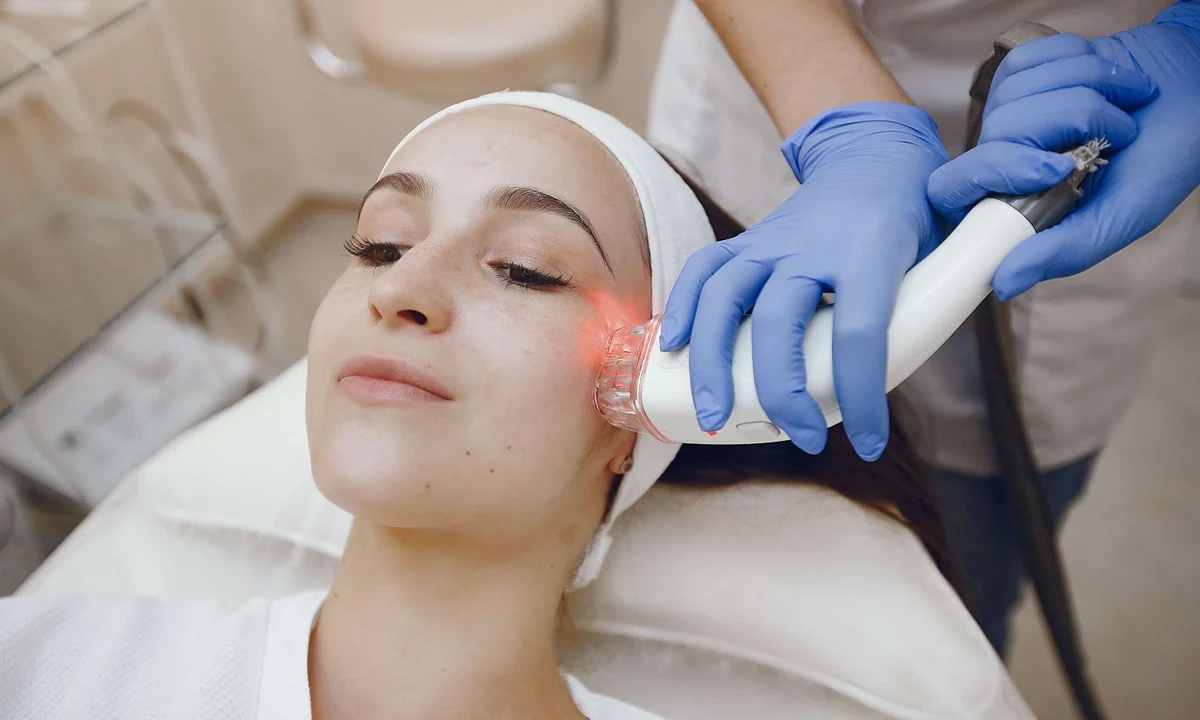
Laser hair removal works by sending a wavelength of light into the skin that is absorbed by the pigment inside the hair follicle. That light becomes heat, and the heat damages the follicle so it produces thinner, weaker hair — and eventually, in many follicles, none at all.
The catch is that it only works on follicles that are in their active growth phase, and at any given moment only a portion of your hair is in that phase. That is the entire reason a course is needed rather than a single session, and why sessions are spaced four to six weeks apart.
For brown and darker skin, the choice of wavelength matters enormously. Melanin in the skin competes with melanin in the follicle for that light, which is how burns and pigmentation happen when the settings are wrong. We use a diode platform with contact cooling and select parameters by Fitzpatrick type, then build energy across sessions rather than starting at maximum.
Benefits
- Long-lasting reduction in hair density, not just temporary removal
- Ends the cycle of waxing, threading and the ingrown hairs that follow
- Helps folliculitis and razor bumps caused by shaving
- Treats large areas quickly — full legs in under an hour
- Hair that does regrow is typically finer and lighter
- No downtime; you can return to normal activity the same day
- Particularly useful for facial hair alongside investigation of the hormonal cause
Who it suits — and who it doesn't
A good candidate if…
- You have dark hair with reasonable contrast against your skin
- You can commit to a full course spaced 4–6 weeks apart
- You are willing to stop waxing and threading during the course
- You understand this is long-lasting reduction, not permanent removal
- You will use sun protection on treated areas
Not suitable, or postponed, if…
- You are pregnant or breastfeeding
- You have taken isotretinoin in the last 6 months
- The hair is white, grey, red or very blonde — there is no pigment for the laser to target
- You have an active skin infection, cold sore or open wound in the area
- You have a tan or recent sun exposure on the area
- You have a photosensitising condition or take photosensitising medication
- You have a history of keloid scarring in the area
This list is not exhaustive. Your medical history, medications and previous treatments are reviewed at consultation, and that review sometimes changes the plan.
The procedure, step by step
- Consultation and patch test. Skin type assessed, history taken, and a small test area treated. We wait 24–48 hours to check the response before booking the course.
- Preparation. Shave the area 12–24 hours before your session. Do not wax, thread or use hair-removal cream for at least two weeks beforehand — the laser needs the root present.
- Protection. You and the operator wear wavelength-specific eye protection for the whole session.
- Treatment. The handpiece is moved across the area in overlapping passes. Most patients describe it as a warm snap, like a rubber band, with cooling between pulses.
- Immediately after. Mild redness and small bumps around each follicle are normal and usually settle within a few hours. A cooling gel is applied before you leave.
- Between sessions. Shaving is fine. Waxing and threading are not. Sunscreen daily on exposed treated areas.
- Review. We compare density at each visit and adjust energy upward as tolerance allows.
Recovery and aftercare
There is no real downtime. Expect redness and slight swelling around the follicles for a few hours, occasionally up to 24 hours on sensitive areas like the face or underarms.
For 48 hours: avoid hot showers, steam rooms, saunas, swimming pools and vigorous exercise. Heat and sweat on freshly treated skin increases irritation and, rarely, infection risk.
For two weeks: no direct sun on the treated area, and daily broad-spectrum SPF 30+ on anything exposed. This is the single most important instruction — sun exposure on recently lasered skin is the main cause of post-treatment pigmentation in brown skin.
You may notice hairs appearing to grow in the following one to three weeks. This is usually shedding, not regrowth — the damaged hairs working their way out. Do not pluck them; let them fall.
Results you can expect
Most patients notice a visible reduction in density after two to three sessions. A typical course of six to eight sessions produces a substantial, long-lasting reduction — commonly in the region of 70 to 90 per cent fewer hairs in the treated area, though this varies considerably with hair colour, coarseness, hormones and the body site.
It is not permanent. Follicles can be reactivated by hormonal change — puberty, pregnancy, PCOS, thyroid disorders, certain medications. Most patients return for a maintenance session once or twice a year after completing a course, and that is normal rather than a sign the treatment failed.
Some areas respond better than others. Underarms and bikini line usually respond well. Facial hair in women often responds more slowly and, if there is an underlying hormonal cause, laser alone will not hold the result — which is why we investigate rather than just treat.
Pricing. Priced per area and per course, quoted at your consultation after the patch test. Course pricing is lower than paying session by session, and if your assessment shows you need fewer sessions than the standard course, you pay for fewer. Maintenance sessions after the course are charged at a reduced rate. Ask on WhatsApp for the current price list for your area.
Frequently asked questions
How many sessions will I need?
Most areas need six to eight sessions spaced four to six weeks apart. Coarse hair on the face or in hormonally driven patterns can need more. You will be given an expected number at consultation.
Does it hurt?
Most patients describe a warm snapping sensation with contact cooling in between. Bony areas and the upper lip are more sensitive than legs or arms. It is uncomfortable rather than painful, and we can apply numbing cream for small sensitive areas.
Is it safe for brown or dark skin?
Yes, with the correct wavelength, longer pulse durations, effective cooling and conservative energy. The risk in darker skin is burns and post-inflammatory pigmentation from settings that are too aggressive, which is why we patch test first and build energy gradually.
Can I shave between sessions?
Yes, shaving is encouraged. What you must avoid is waxing, threading, plucking and hair-removal cream, because these remove the root the laser needs to target.
Will the hair grow back?
Treated follicles that are successfully damaged do not regrow, but dormant follicles can activate later, particularly with hormonal change. Plan on a maintenance session once or twice a year.
Can I have it during pregnancy?
We do not treat during pregnancy. There is no strong evidence of harm, but there is also no good evidence of safety, and pregnancy hormones make results unpredictable. We would rather wait.
What about facial hair — will laser fix it permanently?
Laser reduces the hair, but if the cause is hormonal — PCOS being the most common — the hair will keep being driven back. We look for the cause and treat that alongside, otherwise you are paying to treat a symptom repeatedly.
Can I have laser if I have a tan?
No. Tanned skin has more melanin at the surface competing for the laser energy, which raises burn risk. We ask for two weeks with no sun exposure or self-tan before a session.
Written and medically reviewed by Dr. Bareera Usman, MBBS
Last reviewed: July 2026. This page is general information, not a diagnosis or a treatment plan for any individual.
Next step
Start with a patch test
A short consultation, a test patch, and a clear price for your area before you commit to anything.
Near Gymkhana, VehariMon–Sat, 1:00 PM – 8:00 PM · 0302-1436060